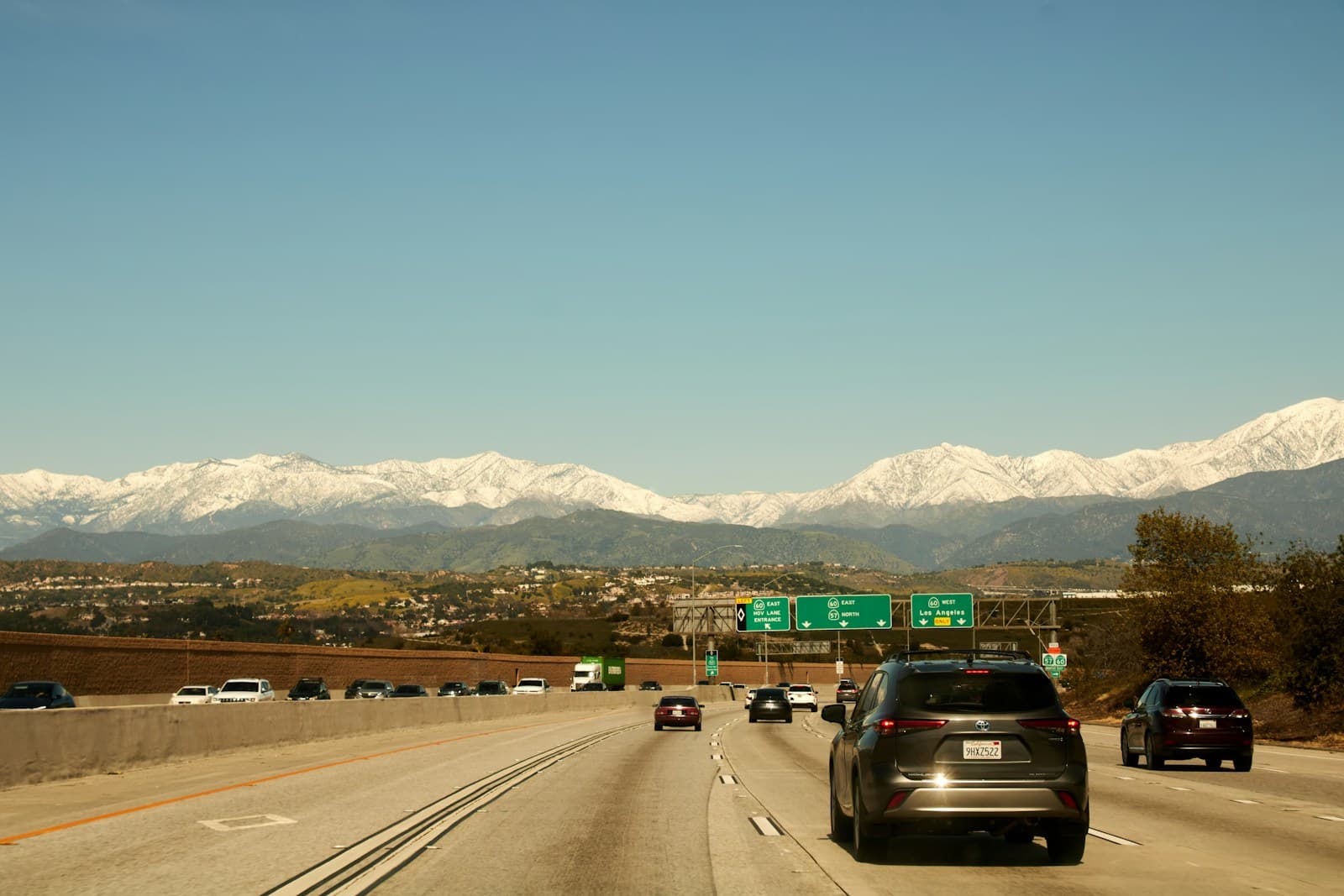
Nevada SR-22 for Out-of-State Drivers—The Filing Complication
You hold a California, Arizona, or Texas license. You were cited in Nevada—DUI, reckless driving, or uninsured operation. Nevada DMV suspended your Nevada driving privileges and requires SR-22 filing before reinstatement. Your home-state insurer tells you they cannot file SR-22 in Nevada because you are not a Nevada resident. Your Nevada DMV notice says you need proof of insurance from a Nevada-authorized carrier. You are stuck between two systems that do not align.
Nevada DMV does not care what state issued your driver's license. When you are suspended in Nevada, reinstatement requires SR-22 filing from a carrier authorized to write policies in Nevada—even if you never lived here. The suspension applies to your privilege to drive in Nevada, not to your home-state license directly, but the two are linked through interstate reporting compacts. Until you satisfy Nevada's SR-22 requirement, your home state may impose restrictions or refuse to renew your license.
Compare car insurance rates in your state
Get quotes from licensed carriers — no obligation, no spam, results in minutes.
Get Your Free QuoteNevada SR-22 Filing Period
3 years
Nevada requires continuous SR-22 filing for three years from your reinstatement date. A lapse triggers automatic re-suspension of your Nevada driving privileges, and your home state receives notification through the Driver License Compact.
NRS 485.187
Why Your Home-State Carrier Will Not File in Nevada
Carriers are licensed state by state. Your California policy from State Farm, your Arizona policy from Geico—those contracts are issued under each state's regulatory framework. An SR-22 is a state-specific certificate of financial responsibility filed electronically with that state's DMV. If your carrier is not licensed to write policies in Nevada, they cannot file Nevada SR-22, even if they cover you everywhere else.
Some national carriers write in all 50 states. Others cherry-pick. Mercury General, for example, operates in 11 states—Nevada is one, but most Mountain West and Midwest states are not. If your home-state carrier does not appear on Nevada DMV's authorized insurer list, you need a separate Nevada policy or a non-owner policy from a Nevada-licensed carrier.
The misalignment happens because Nevada suspended your driving privileges in Nevada—not your home-state license—but the two are functionally linked. Your home state will eventually learn of the Nevada suspension through the Driver License Compact and may impose penalties or refuse renewal until you resolve the Nevada filing requirement. You must satisfy Nevada's SR-22 obligation to clear both states.
Nevada's transient population means DMV processes hundreds of out-of-state SR-22 cases monthly—but residency verification and premium surcharges for non-residents make this pathway more expensive than it appears.
Getting Nevada SR-22 Without Nevada Residency
Most carriers require a Nevada address to bind a standard auto policy. If you do not own or register a vehicle in Nevada, and you do not maintain a Nevada residence, a non-owner SR-22 policy is the cleanest path. Non-owner policies provide liability coverage when you drive a vehicle you do not own—exactly the structure needed for out-of-state filers who only need to satisfy Nevada DMV's SR-22 requirement. Bristol West, Dairyland, Geico, Progressive, The General, and USAA all write non-owner SR-22 policies in Nevada. Rates range from $85 to $140 per month depending on your violation type and age.
If you own a vehicle registered in your home state, you need Nevada SR-22 filing attached to a Nevada policy—not a non-owner certificate. This creates a residency verification problem. Carriers require proof that the vehicle is garaged in Nevada, which means you will need to provide a Nevada address where the vehicle is kept overnight. Some carriers accept a temporary Nevada address if you can document that you spend significant time in the state—seasonal workers, military personnel on temporary assignment, or long-haul truckers with Nevada-based employers often qualify. Others refuse to write the policy unless you transfer your vehicle registration and driver's license to Nevada.
Related Articles




Out-of-State Premium Surcharges and Rating Mechanics
Carriers price out-of-state filers as higher risk even when your violation happened in Nevada. The underwriting logic: if you do not live in Nevada but need Nevada SR-22, you are either avoiding home-state consequences or managing a multi-state suspension. Both profiles elevate loss probability in the carrier's actuarial models. Expect a 15–30% surcharge on top of the SR-22 filing surcharge, which already adds 40–80% to your base premium depending on the violation.
Non-owner policies partially offset this. Because you are not insuring a specific vehicle, the base premium starts lower—typically $300 to $600 annually for a clean-record non-owner policy. The SR-22 surcharge and the out-of-state surcharge stack on top, pushing the annual cost to $1,000 to $1,700 for DUI filers. Standard policies with SR-22 for out-of-state vehicle owners run $1,800 to $3,200 annually in Nevada depending on the vehicle and the violation.
Carriers writing non-standard and high-risk auto in Nevada—Bristol West, Dairyland, Infinity, Kemper, National General, The General—actively compete for out-of-state SR-22 business. Their pricing is more predictable and less sensitive to residency complications than preferred-tier carriers. If you hold a California or Arizona license and need Nevada SR-22, start your comparison with non-standard carriers rather than trying to force State Farm or Allstate to write a policy they are not set up to handle.
Nevada Reinstatement Fee for SR-22 Suspension
$75
Nevada charges a $75 reinstatement fee specifically for suspensions triggered by failure to maintain required insurance or SR-22 filing. This is in addition to the $35 base reinstatement fee for other suspension types. Out-of-state license holders pay the same fees as residents.
Nevada DMV fee schedule
What Happens If You File SR-22 in Your Home State Instead
Some drivers assume they can satisfy Nevada's requirement by filing SR-22 in their home state. This does not work. SR-22 certificates are state-specific—they are filed with the state DMV that ordered them. Nevada DMV does not monitor your California SR-22 filing. Your California DMV does not forward it to Nevada. The two systems do not communicate at the certificate level.
Your home state may independently require SR-22 if your Nevada suspension triggered a home-state penalty through the Driver License Compact. In that case, you will file SR-22 in both states—one with Nevada DMV to reinstate your Nevada driving privileges, and one with your home-state DMV to maintain your home-state license. Double filing is common for out-of-state DUI convictions. Expect to carry two separate policies or pay two filing fees on one non-owner policy if your carrier supports dual-state filing.
Compare Nevada-Licensed Carriers and Lock Your Rate
Nevada DMV maintains a list of authorized insurers eligible to file SR-22 electronically. Your carrier must appear on that list. Geico, Progressive, Bristol West, Dairyland, The General, and National General write the majority of Nevada non-owner SR-22 policies for out-of-state filers. Rates vary by 40–60% between carriers for identical coverage and violation profiles. You will not know which carrier prices your situation lowest until you request quotes from at least three.
Start with non-owner SR-22 coverage if you do not own a vehicle or cannot establish a Nevada garaging address. If you own a vehicle registered in your home state and spend significant time in Nevada, request standard policy quotes with Nevada SR-22 attached—but prepare for residency verification requirements that may force you to transfer your registration. Every day you delay filing extends your suspension and pushes your three-year SR-22 clock further into the future.