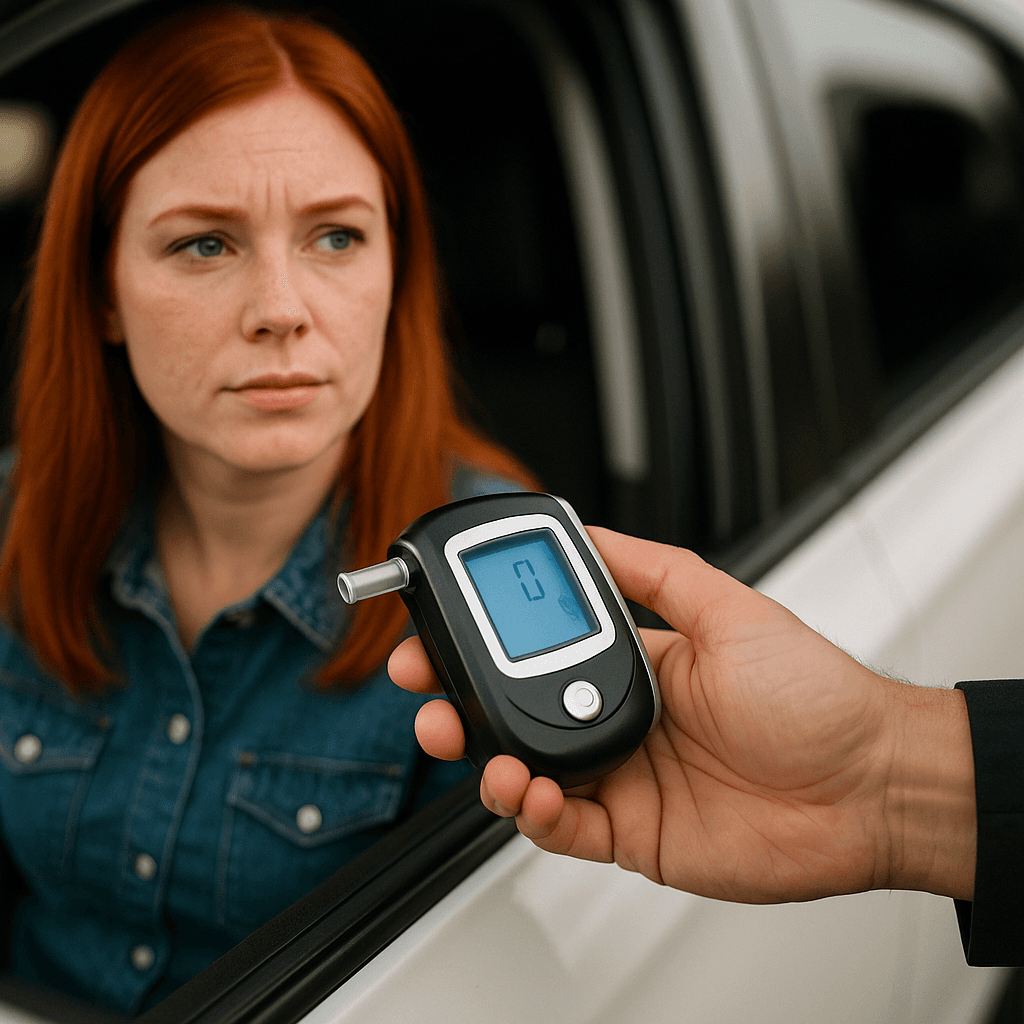
Two Suspensions From One DUI
You were arrested for DUI in Nevada and now face two separate license suspensions: one imposed immediately by the Nevada DMV under administrative per se rules, and one ordered by the criminal court after conviction. Most drivers do not realize these are parallel tracks with separate timelines, separate reinstatement requirements, and separate fees. Missing either reinstatement pathway leaves your license suspended even after you satisfy the other.
The DMV administrative suspension begins the day you are arrested if your blood alcohol concentration measured 0.08 or above, triggered by NRS 484C.220. The criminal court suspension begins after conviction. Both suspensions run concurrently in most cases, but the reinstatement requirements stack: you must satisfy the DMV administrative track AND the court-ordered track before the state restores full driving privileges. This article walks the procedural sequence for both.
Compare car insurance rates in your state
Get quotes from licensed carriers — no obligation, no spam, results in minutes.
Get Your Free QuoteNevada First-DUI Hard Suspension
45 days
Nevada law mandates a 45-day period during which no driving is permitted before you become eligible to apply for a restricted license with an ignition interlock device. This hard suspension applies to first-time DUI offenders; subsequent offenses carry longer mandatory periods.
NRS 483.490
What Nevada Calls Full Reinstatement
Full reinstatement means satisfying both the administrative DMV suspension and the criminal court suspension, paying all required fees, completing DUI education requirements, installing an ignition interlock device for the required period, and maintaining SR-22 insurance filing for three years from the conviction date. Nevada does not restore your license automatically when the suspension period ends. You must affirmatively apply for reinstatement and prove compliance with every condition.
The base reinstatement fee for a DUI-triggered suspension is $75, but this is only one component of total reinstatement costs. If you allowed your insurance to lapse during suspension, you face a separate insurance-related reinstatement fee. If unpaid traffic fines or court fees remain outstanding, the DMV will block reinstatement until those are cleared. The DMV administrative hearing office and the criminal court clerk operate as separate systems — satisfying one does not notify the other.
Most first-time offenders mistakenly believe the 185-day minimum suspension period cited in their court paperwork is the full timeline. That 185 days includes the 45-day hard suspension plus 140 days of restricted license eligibility with an ignition interlock device. You are not driving unrestricted after 185 days unless you have completed every reinstatement condition, applied to the DMV, and received written confirmation that your full license has been restored.
The single most common reinstatement failure: drivers complete the suspension period and DUI school but never file for reinstatement with the DMV, assuming restoration happens automatically.
Administrative DMV Track Reinstatement Steps

The administrative per se suspension begins the day of arrest if you submitted to a breath or blood test showing 0.08 BAC or higher, or if you refused testing. Nevada DMV sends a notice of suspension and hearing rights to the address on file. If you do not request a hearing within seven days, the suspension becomes final. The first-offense administrative suspension lasts 90 days for BAC 0.08 to 0.17, or 185 days for BAC 0.18 or higher or for test refusal. After the 45-day hard suspension, you may apply for a restricted license requiring an ignition interlock device.
To lift the administrative suspension, you must submit proof of completing a state-approved DUI education program, proof of SR-22 insurance filing, proof of ignition interlock device installation by a state-certified vendor, and payment of the $75 reinstatement fee. These documents go to the Nevada DMV Compliance Enforcement Section. The DMV does not process reinstatement applications online for DUI cases; you must appear in person at a DMV office or mail certified documents. Processing typically takes 10 to 15 business days after the DMV receives complete documentation.
Related Articles





Criminal Court Track Reinstatement Steps
The criminal court suspension begins after DUI conviction and runs for a minimum of 185 days for a first offense under NRS 484C.400. This suspension is separate from the administrative DMV suspension even though the timelines often overlap. The court suspension requires you to complete a victim impact panel, pay all court-ordered fines and fees, and comply with probation conditions if probation was imposed.
Your criminal defense attorney or the court clerk should provide a compliance checklist, but the court does not automatically notify the DMV when you complete these requirements. You must obtain a court clearance letter confirming that all criminal court conditions have been satisfied, then submit that letter to the DMV as part of your reinstatement application. Without the court clearance letter, the DMV will deny reinstatement even if you have satisfied every administrative requirement.
Second and subsequent DUI offenses carry longer mandatory suspension periods and stricter reinstatement conditions. A second DUI within seven years triggers a one-year license revocation with a three-year ignition interlock requirement after reinstatement. A third DUI within seven years results in a three-year revocation with no restricted license eligibility during that period. These extended timelines are non-negotiable; hardship or restricted licenses are not available during the revocation period for third offenses.
Nevada SR-22 Filing Period After DUI
3 years
Nevada requires continuous SR-22 insurance filing for three years following a DUI conviction. The three-year period begins on the conviction date, not the date you file SR-22 or the date your license is reinstated. If your SR-22 lapses at any point during the three years, the DMV suspends your license again and the three-year clock resets from the date you refile.
Nevada DMV SR-22 requirements
Ignition Interlock Device Requirements
Nevada law requires installation of an ignition interlock device as a condition of restricted license eligibility after the 45-day hard suspension. The device must be installed by a state-certified vendor; Nevada maintains a list of approved vendors on the DMV website. You pay installation, monthly monitoring fees, and calibration costs directly to the vendor. Typical total cost runs $70 to $150 for installation and $60 to $90 per month for monitoring, paid for the entire restricted license period.
The ignition interlock device records every attempt to start the vehicle, every failed breath test, and every instance of tampering or circumvention. The vendor downloads this data monthly and reports violations to the DMV. Common violations that trigger license re-suspension include failing a rolling retest while driving, attempting to start the vehicle with alcohol detected above the programmed threshold (typically 0.02 BAC), missing a scheduled calibration appointment, or having someone else blow into the device. Nevada does not issue warnings for interlock violations; the DMV suspends your restricted license immediately and you must begin the reinstatement process again from the start.
SR-22 Insurance Filing After DUI
Nevada requires SR-22 filing to prove continuous liability insurance coverage for three years after DUI conviction. SR-22 is not a type of insurance; it is a certificate your insurance carrier files electronically with the Nevada DMV confirming that you carry at least Nevada's minimum liability limits: $25,000 per person for bodily injury, $50,000 per accident for bodily injury, and $20,000 for property damage. Not all carriers write SR-22 policies for DUI offenders. Carriers that specialize in high-risk drivers include GEICO, Progressive, Bristol West, The General, and Dairyland. Your current carrier may drop you after a DUI conviction; if that happens, you must find a new carrier willing to file SR-22 before your reinstatement application is complete. Most carriers charge a one-time filing fee to submit the SR-22 certificate; the fee amount is set by the carrier and typically ranges from $15 to $50. The three-year SR-22 period is measured from your conviction date. If you cancel your policy, switch carriers without ensuring the new carrier files SR-22, or allow coverage to lapse for any reason during the three years, the Nevada DMV receives an electronic notification within 24 hours and suspends your license again immediately. When that happens, the three-year SR-22 clock resets from the date you refile, and you must pay the $75 reinstatement fee again.